Wellness
Miami Heat Drives Workers to Midday Naps: Science Shows Timing Matters
Miami's heat, hustle, and post-lunch crashes have made midday sleep a hot topic — but the science says timing and length are everything.
4 min read
Wellness
Miami's heat, hustle, and post-lunch crashes have made midday sleep a hot topic — but the science says timing and length are everything.
4 min read
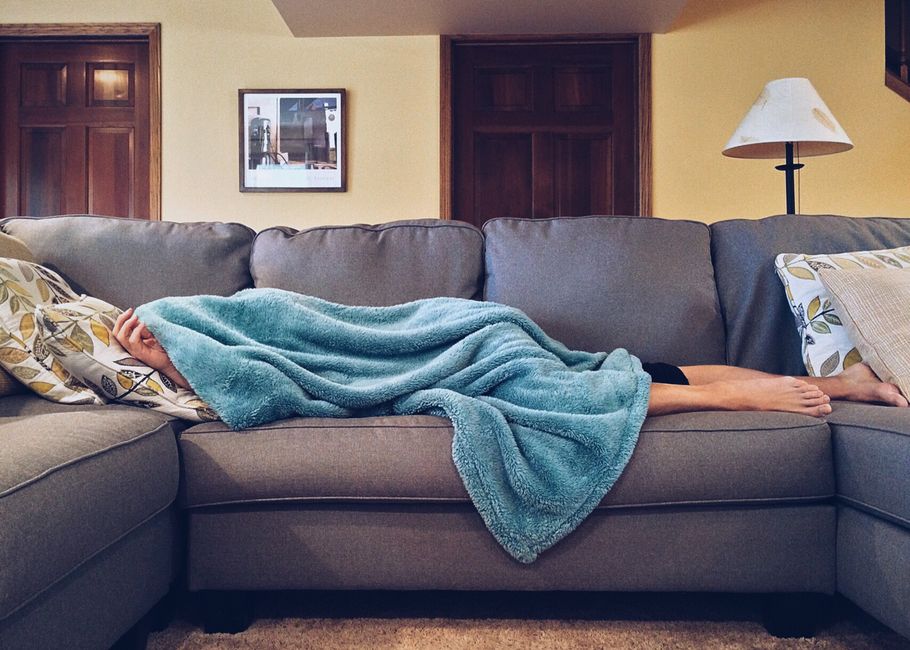
The afternoon slump hits Brickell hard around 2 p.m. Office workers in glass towers along South Brickell Avenue, fitness instructors wrapping up lunchtime classes at Equinox on Brickell City Centre, and freelancers camped out at Panther Coffee in Wynwood all know the feeling: the body wants to stop, right in the middle of the workday. The question Miami's wellness community is increasingly debating is whether giving in to that urge actually helps — or quietly wrecks your night.
Sleep health has climbed the wellness agenda sharply in the past 18 months, partly driven by wearables tracking every REM cycle and partly by growing awareness that chronic sleep deprivation is linked to cardiovascular disease, metabolic disorders, and cognitive decline. In a city that runs on early-morning SoulCycle sessions and late-night restaurant shifts, the gap between sleep need and sleep reality is wide. The Centers for Disease Control and Prevention reported in 2024 that roughly 35 percent of American adults regularly get fewer than seven hours a night — and South Florida's shift-heavy hospitality workforce skews that number worse locally.
Sleep researchers have settled on a fairly consistent sweet spot for restorative napping: 10 to 20 minutes. A nap that short keeps you in the lighter Stage 1 and Stage 2 sleep cycles. You wake up feeling sharper, not groggy. The problem starts when a nap stretches past 30 minutes and edges into slow-wave sleep — Stage 3, the deep restorative phase your body also relies on at night. Wake up from that, and you get sleep inertia: that heavy, disoriented fog that can take 20 to 30 minutes to clear. For someone running back-to-back client meetings on Miracle Mile in Coral Gables, that's a real productivity hit.
The timing matters just as much as the length. A nap taken between noon and 3 p.m. aligns with a natural dip in the human circadian rhythm — the same biological clock that regulates cortisol and melatonin. Push that nap past 4 p.m. and you risk shaving off the sleep pressure that helps you fall asleep by 11 p.m. For Miami residents already fighting the city's social pull toward late dinners and midnight bar crowds on Ocean Drive, a late nap is the last thing a fragile sleep schedule needs.
Local businesses have started taking the nap conversation seriously. The Standard Spa on Belle Isle, which sits on the causeway between Miami Beach and the mainland, has long offered a midday relaxation program built around its thermal pools and quiet zones — a structure that happens to align perfectly with sleep science's recommended nap window. Guests are encouraged to arrive between 1 p.m. and 3 p.m. for what the spa markets as a reset ritual, with day passes running $85 on weekdays as of July 2026.
Further north, the Anatomy gym in South Beach added a dedicated recovery lounge in early 2026, fitted with reclining zero-gravity chairs and a 25-minute guided audio wind-down track. The program costs $15 per session as an add-on to a membership. It's a small but telling signal: recovery, including deliberate rest, is being packaged and sold as a performance tool, not a guilty indulgence.
For people managing shift work — a significant chunk of Miami-Dade County's 1.3 million workforce — the calculus is different. Hospital workers at Jackson Memorial pulling overnight rotations, for instance, benefit from longer anchor naps of 90 minutes, which allow one full sleep cycle and can blunt the cognitive damage of night-shift work. The National Sleep Foundation recommends these longer naps only when overnight shifts make a full night's sleep impossible, not as a regular supplement to a normal schedule.
The practical upshot for most Miami residents is straightforward: keep it short, keep it early, and keep it consistent. Set an alarm for 20 minutes, find a dark corner — even your car parked in the shade off Calle Ocho works — and don't apologize for it. The science backs you. Just don't let it become a two-hour disappearing act that has you staring at the ceiling at midnight wondering where the night went. A physician or sleep specialist at a clinic like the University of Miami Health System's sleep program can help anyone dealing with persistent insomnia figure out whether napping is helping or making things worse.

Wellness

Wellness

Wellness

Wellness
About this article
Published by The Daily Miami
Spread the word
Daily brief
Free, in your inbox before 7am. Weekdays.
The Daily Network — local news across Australia