Wellness
Gut Health 101: Fermented Foods You Can Find Locally
From Wynwood kombucha bars to Little Havana's pickle vendors, Miami's fermented food scene is quietly becoming one of the city's most serious wellness stories.
4 min read
Wellness
From Wynwood kombucha bars to Little Havana's pickle vendors, Miami's fermented food scene is quietly becoming one of the city's most serious wellness stories.
4 min read
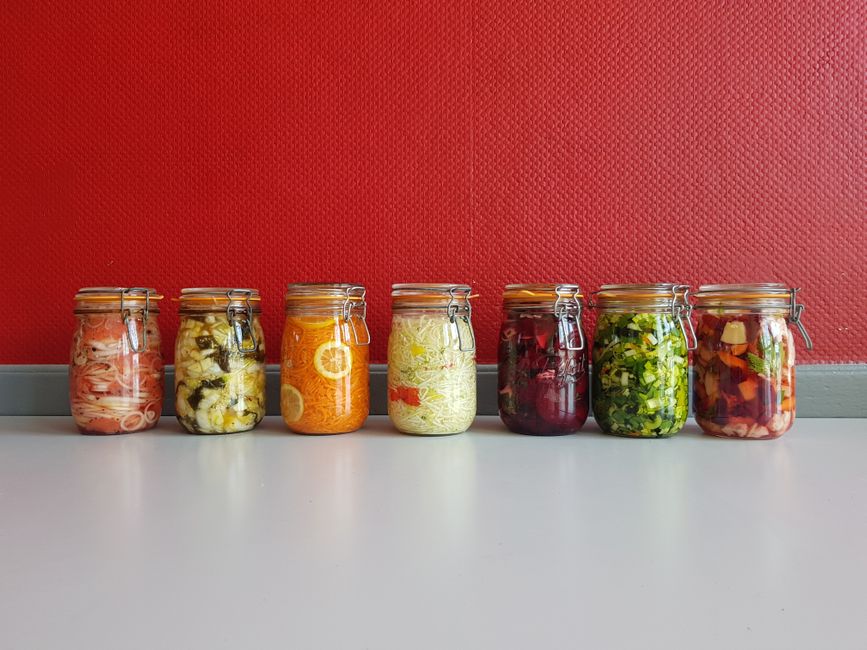
Sales of fermented food products in South Florida specialty grocery stores climbed roughly 34 percent between 2023 and 2025, according to market tracking data compiled by the Natural Grocers Cooperative Network — and Miami's restaurant and market scene has moved fast to keep up. On any given Saturday morning at the Coconut Grove Farmers Market on Grand Avenue, at least four vendors now specialize exclusively in products built around live cultures: kimchi, kefir, raw sauerkraut, water kefir sodas, and Jun tea.
The timing matters. Gut health research has accelerated sharply over the past three years, with large-scale studies — including a 2021 Stanford School of Medicine trial published in Cell — establishing that a diet high in fermented foods measurably increases microbiome diversity and reduces inflammatory markers. That science has filtered into mainstream wellness culture faster than almost any other nutrition finding in recent memory. Miami, with its year-round outdoor lifestyle, its Cuban and Colombian food traditions that already embed fermentation into daily cooking, and a fitness-obsessed population concentrated in neighborhoods like Brickell and South Beach, is proving to be particularly fertile ground.
The Glaser Organic Farms stand at the Coconut Grove Farmers Market — open every Saturday from 10 a.m. to 5 p.m. — stocks raw fermented cashew cheeses, beet kvass, and several varieties of cultured coconut yogurt, most priced between $9 and $16. A few miles north on Biscayne Boulevard, The Tasting House in the Upper East Side neighborhood carries an edited selection of locally produced kimchi from Miami Kimchi Co., a small-batch operation that launched in 2023 out of a commissary kitchen in Allapattah. Their classic Napa cabbage jar runs $12 for 16 ounces.
Little Havana deserves its own paragraph. The stretch of SW 8th Street known as Calle Ocho has long sold curtido — a Salvadoran fermented cabbage slaw — alongside Cuban-style pickled vegetables in small grocery windows and family-run bodegas. These aren't marketed as wellness products, which is part of their appeal: they're simply food, made the way they've always been made, and they contain the same live Lactobacillus cultures you'd pay a premium for in a bottle branded with a QR code and a probiotic count. Sedano's Supermarkets, which operates multiple locations across Miami-Dade County including a large store on W Flagler Street, stocks curtido and several fermented hot sauce brands for under $5.
Kombucha has its own dedicated corner of the market. Wynwood Brewing Company on NW 25th Street began offering a rotating kombucha program alongside its beer lineup in early 2025, with 12-ounce pours starting at $6. The brewing team sources local hibiscus and guava for some batches, which makes the product genuinely distinct from national brands. For something more structured, the Anatomy wellness club locations in Miami Beach and Brickell now include fermented beverage stations as part of their nutrition bar service, available to members.
The evidence for fermented foods is real but should be kept in proportion. The Stanford Cell study involved 36 adults over 17 weeks and found that those who ate high-fermented-food diets showed increased microbiome diversity compared to those on high-fiber diets alone. Eighteen distinct inflammatory proteins decreased in the fermented food group. These are meaningful findings. They are not, however, a cure for chronic illness, and anyone managing a specific gastrointestinal condition should speak with a gastroenterologist before overhauling their diet — several practice at the University of Miami Health System's Lennar Medical Center on NW 10th Avenue in Midtown.
The practical starting point is simpler than most wellness content suggests. Add one fermented food to your diet daily for two weeks — a tablespoon of raw sauerkraut with dinner, a small glass of kefir at breakfast, a side of curtido from a Calle Ocho bodega. Consistency matters more than the specific product. Miami's food culture, which has always blended Caribbean, Latin American, and North American traditions, gives residents unusually easy access to the full spectrum of fermented options without requiring a health food store budget. The gut-health aisle has, in many ways, always been hiding in plain sight here.
About this article
Published by The Daily Miami
Spread the word
Daily brief
Free, in your inbox before 7am. Weekdays.