Miami's auction clearance rate fell to 58 percent in June 2026, the lowest monthly reading since January 2024, according to figures compiled by the Miami Association of Realtors. That single number is doing a lot of work right now: it tells buyers they have leverage they haven't had in years, and it tells sellers that the era of setting any price and waiting for the phone to ring is over.
The timing matters. Mortgage rates have been sitting above 7.1 percent for the better part of three months, the Federal Reserve has not moved since its March pause, and Miami's condo inventory has climbed 22 percent year-over-year. Throw in a Fourth of July weekend that has already seen triple-digit heat push people indoors — outdoor events cancelled from Bayfront Park to Virginia Key — and foot traffic at open houses has thinned considerably. Auction events scheduled for late June at two Brickell properties were both postponed after registered bidders failed to meet the minimum threshold set by listing agents.
What the Numbers Actually Mean on the Ground
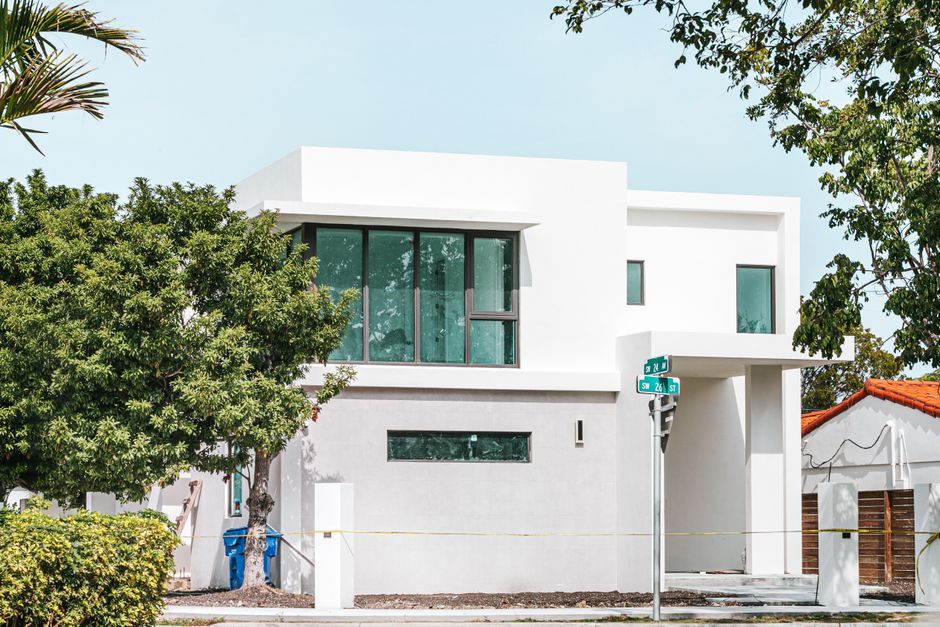
A clearance rate below 60 percent is, broadly, the threshold at which market conditions shift toward buyers. Miami has been tracking above 70 percent for most of the post-pandemic run, hitting a peak of 79 percent in the first quarter of 2025. The pullback is sharpest in the $1.2 million to $2.5 million segment — the mid-luxury tier that covers much of Coconut Grove, the Roads neighborhood south of SW 22nd Street, and parts of Edgewater along Biscayne Boulevard. Properties in that band are sitting an average of 41 days before finding a buyer, up from 18 days a year ago.
Luxury properties above $4 million are holding steadier. A waterfront home on Allison Island in Miami Beach cleared auction last month at $6.85 million, drawing four registered bidders. But that segment is narrow. For the bulk of the market — townhouses in Wynwood listed around $900,000, condos in the Brickell City Centre corridor, single-family homes in Palmetto Bay — the math is getting harder for sellers to ignore.
The Miami Downtown Development Authority has been tracking foot traffic and transaction velocity in the urban core as part of its quarterly Economic Vitality Report. Its June data, released last week, showed a 14 percent decline in closed transactions in the 33130 and 33132 zip codes compared with the same period in 2025. That's not a collapse, but it's not noise either.
What Buyers and Sellers Should Do Before Labor Day
Auction clearance rates are a leading indicator — they signal where prices are heading before the official median figures catch up, typically by six to eight weeks. If June's 58 percent rate holds or falls further through July, expect the headline median price for Miami-Dade to show meaningful softening when the Miami Association of Realtors releases its August report.
For sellers, particularly those with properties listed above $1.5 million in Coral Gables or along NE 2nd Avenue in the MiMo district, the practical implication is straightforward: pricing strategy now requires genuine comparable analysis, not aspirational math. Properties that went to auction without a reserve and failed to clear are already being relisted at discounts of 6 to 9 percent.
Buyers, meanwhile, have a window. Rate uncertainty hasn't disappeared, and the Fed's next scheduled meeting is in September. Anyone waiting for rates to fall before moving is making a bet that the inventory surge will still be there in four months. It may not be. The smarter play, based on where clearance rates have historically bottomed in Miami, is to negotiate hard now — on price, on closing costs, on inspection contingencies — while sellers are still adjusting their expectations rather than after they have.
The auction floor doesn't lie. Right now, it's saying the same thing to everyone in the room: the balance of power has shifted.