Edgewater sold a two-bedroom unit at Missoni Baia for $1.47 million in June 2026 — the highest recorded median sale for a resale condo in the neighbourhood's history, according to Miami Association of Realtors data filed last week. That single transaction caps a run that has seen Edgewater's median price per square foot climb 22 percent over the past eighteen months, outpacing even Brickell's still-formidable numbers.
This matters right now for a specific reason. Brickell and Wynwood — the two corridors that absorbed most of the post-pandemic migration money — are showing signs of saturation. Inventory in Brickell is up 18 percent year-over-year as of June 30. Meanwhile Edgewater, which runs roughly from NE 14th Street north to NE 29th Street along Biscayne Bay, still has fewer than 90 active listings across all price points. Scarcity is doing the heavy lifting.
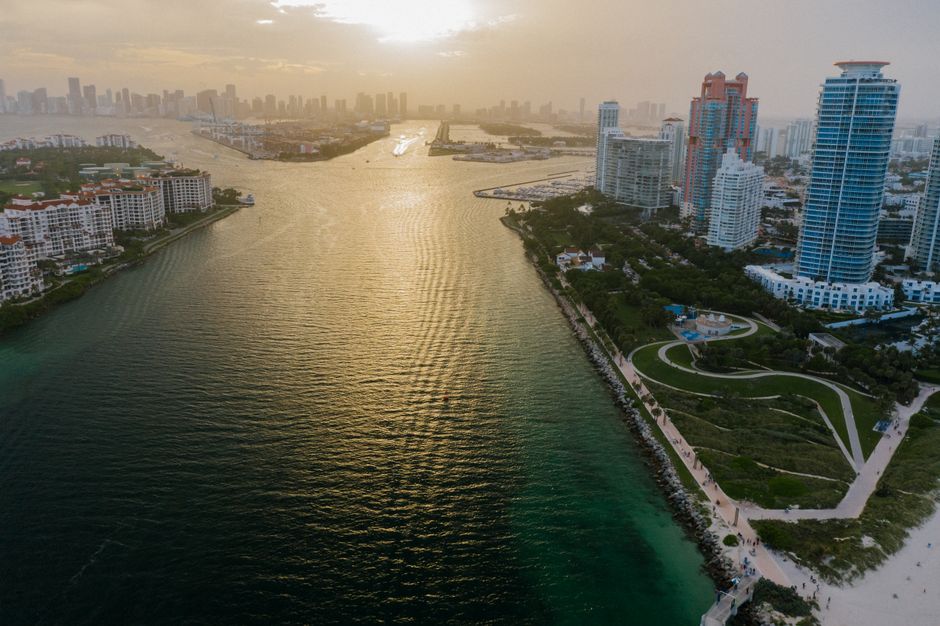
The neighbourhood's physical transformation has been swift and visible. Margaret Pace Park on NE 1st Avenue — once a quiet weekend dog-walk spot — now anchors a half-mile bayfront stretch that draws evening crowds seven days a week. The park's renovation, completed in late 2024 under a Miami-Dade County Parks and Recreation capital improvement grant, added new lighting, a fitness circuit and expanded kayak launch points directly onto Biscayne Bay. Two blocks west, the Instituto Cultural Brasil-Estados Unidos hosts rotating art installations that have helped position Edgewater as a credible cultural address rather than just an overflow valve for Wynwood foot traffic.
What's Driving the Price Momentum
Three buildings account for most of the recent volume. Missoni Baia at 777 NE 26th Terrace, Elysee Miami at 788 NE 23rd Street, and the recently delivered One Paraiso at 3131 NE 7th Avenue have all recorded closed sales above $900 per square foot in the second quarter of 2026. That figure was essentially unthinkable in Edgewater five years ago, when the neighbourhood averaged closer to $480 per square foot. The gap between then and now reflects not just inflation but a genuine recalibration of how buyers are pricing bayfront access.
Part of the buyer pool is coming from abroad. Brazilian and Colombian purchasers — historically concentrated in Brickell and Coral Gables — have been redirecting toward Edgewater partly because of price arbitrage and partly because of direct flight connectivity through Miami International Airport that has only expanded since 2024. Cash purchases still represent roughly 58 percent of closed transactions in the neighbourhood, a figure that keeps the market insulated from Federal Reserve rate decisions in ways that inland submarkets simply cannot claim.
Where This Goes From Here
Two pipeline projects will test whether Edgewater can absorb new supply without softening. Okan Tower, technically on the Edgewater-Overtown border near NW 2nd Avenue, will deliver approximately 236 residential units when it completes, currently projected for mid-2027. A second mixed-use development at the former Bayside Lofts site on NE 16th Street has received Miami City Commission approval for 312 units and is scheduled to break ground before year-end.
Buyers looking at Edgewater right now should move before that pipeline becomes a conversation point in listing presentations, because sellers will use it to justify holding prices even as supply technically rises. The window is probably twelve to eighteen months. Investors who want waterfront exposure without paying Coconut Grove prices — where waterfront single-family homes routinely breach $5 million — should be walking NE 23rd Street this weekend rather than watching fireworks. The ones they can actually see, given that heat has cancelled outdoor events from Washington to Philadelphia, might have to wait for another year anyway.